अगर अभी किसी stranger से मिलें, तो आप English में क्या कहेंगे?
सोचिए: “Hi”, “Hello”, “My name is…”, या “How are you?” इस lesson में आप exactly वही basic lines सीखेंगे जो daily life, interview, class, shop, aur phone call में काम आती हैं.
Greetings, self-introduction, sentence pattern, simple questions, polite replies, and speaking practice.
Basic speaking confidence opens doors in study, work, interviews, and everyday communication.
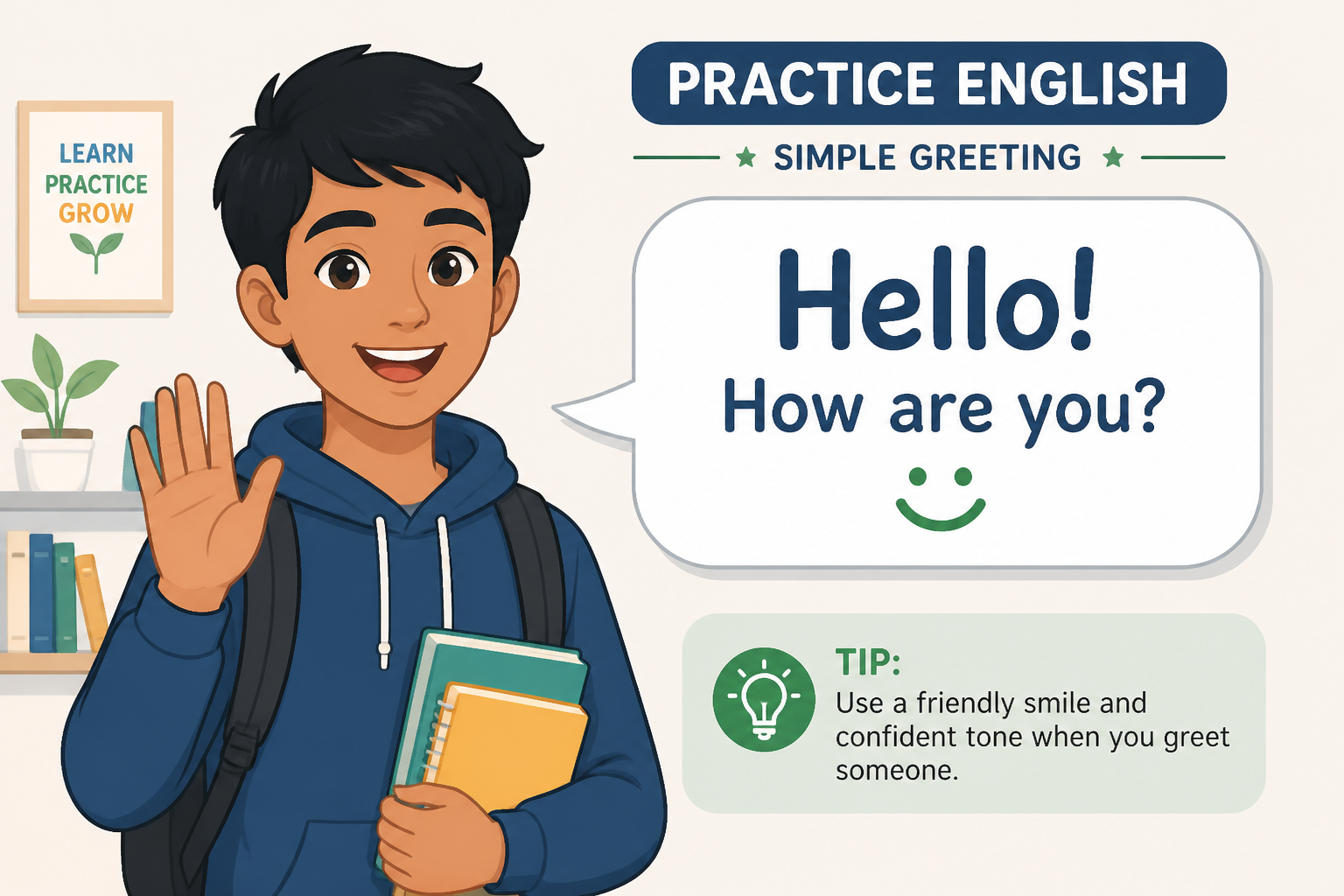
पहला step: simple greetings
Conversation को perfect grammar से नहीं, simple greeting से शुरू कीजिए. Day-to-day English में short and clear lines सबसे useful होती हैं.
- 1Hello / Hi
नमस्ते / हाय - 2Good morning
सुबह की greeting - 3How are you?
आप कैसे हैं?
Tap to hear the meaning in your mind
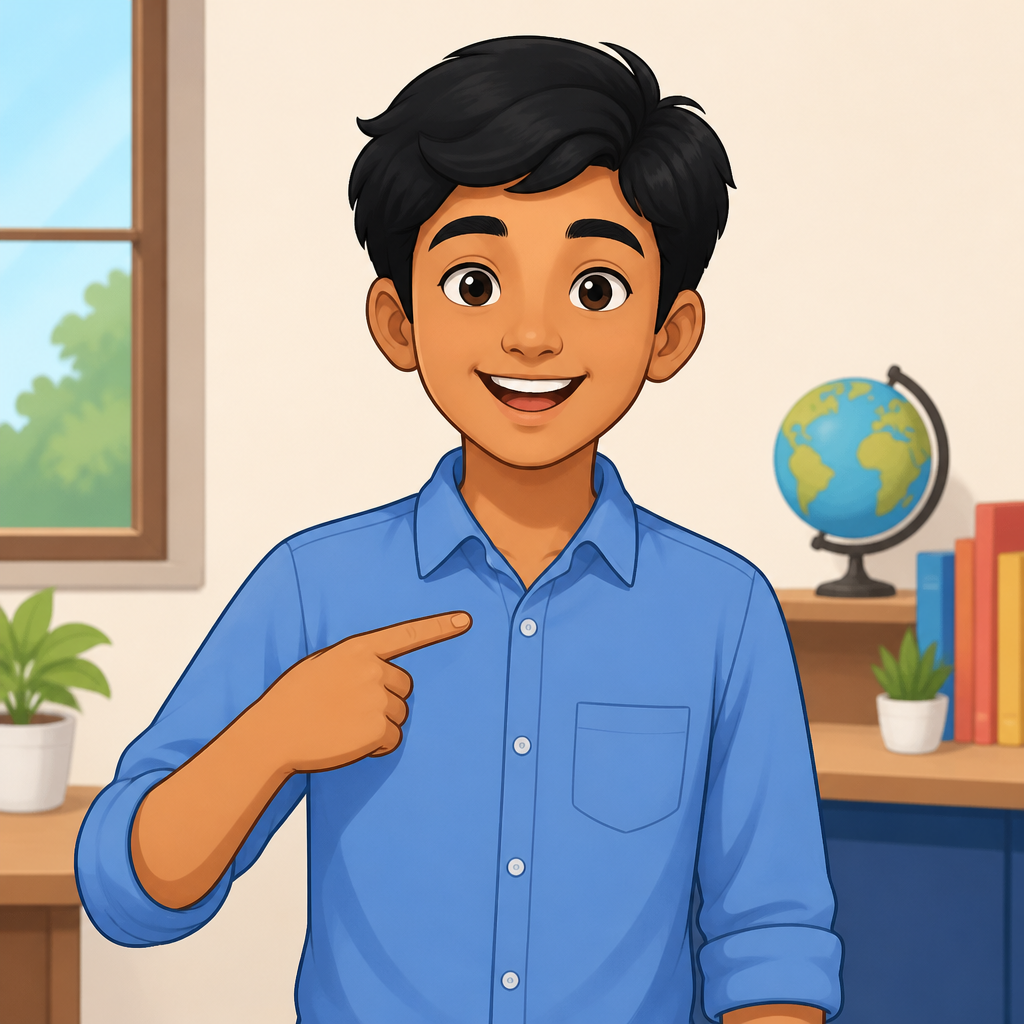
अपना परिचय देना सीखें
Self-introduction के लिए लंबा paragraph नहीं चाहिए. तीन lines काफी हैं: name, place, and role. पहले short version में fluency बनाइए.
मेरा नाम रिया है।
मैं जयपुर से हूँ।
मैं एक student हूँ।
Which sentence is best for introducing yourself?
Basic pattern: Subject + am/is/are + detail
Beginner English speaking में यह pattern बहुत useful है. इससे आप identity, feeling, place, and status बोल सकते हैं.
मैं खुश हूँ।
वह मेरी दोस्त है।
हम तैयार हैं।
वे घर पर हैं।
Words जोड़कर sentence बनाइए
English speaking fluency के लिए word order practice बहुत ज़रूरी है. नीचे दिए words को सही क्रम में press करें.
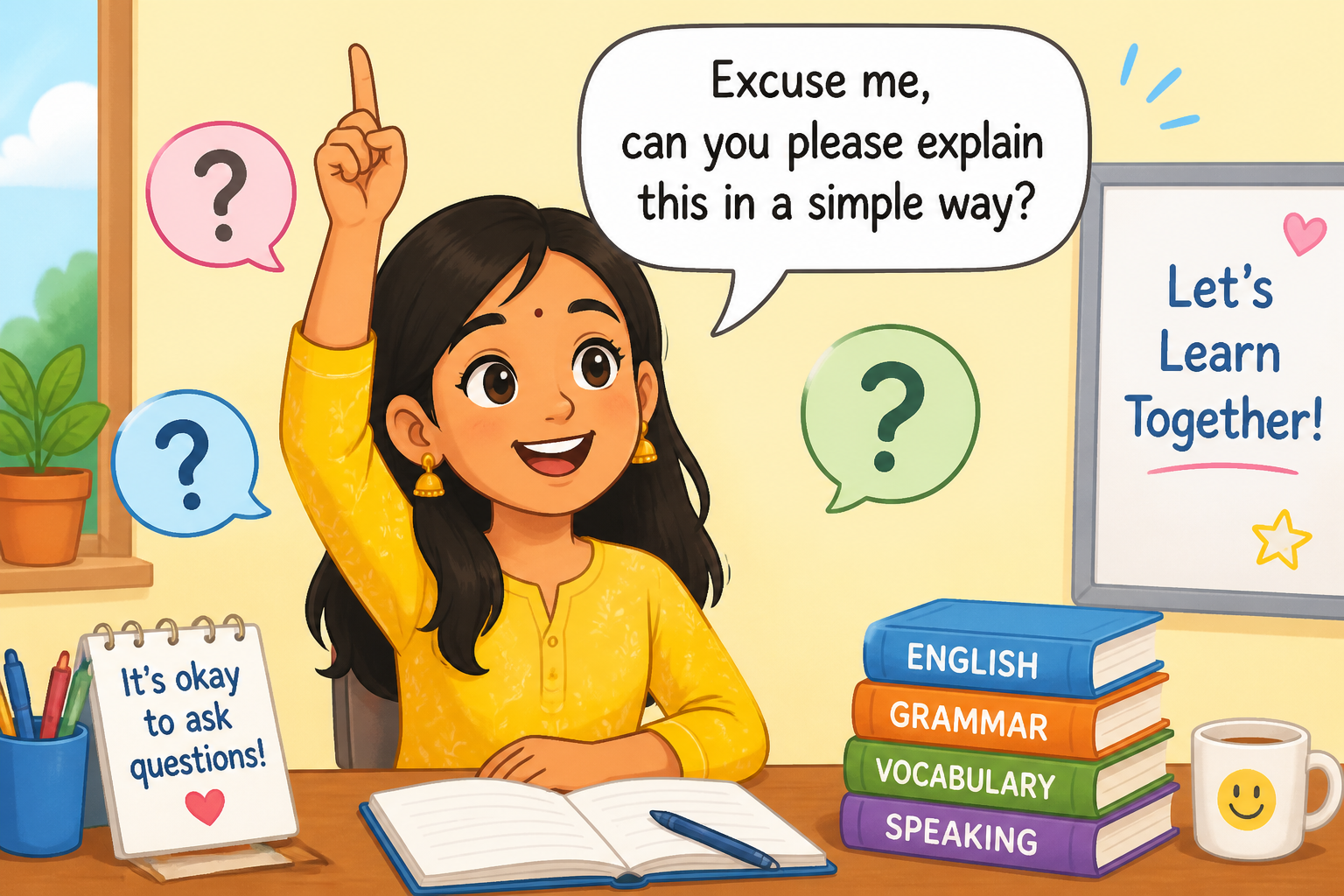
Basic questions कैसे पूछें
Speaking सिर्फ बोलना नहीं, पूछना भी है. Daily conversation के लिए 4 question frames याद रखें.
- What is your name?
आपका नाम क्या है? - Where are you from?
आप कहाँ से हैं? - What do you do?
आप क्या करते हैं? - Can you help me?
क्या आप मेरी मदद कर सकते हैं?
Which question asks about someone’s hometown or city?
Please, Sorry, Thank you — small words, big impact
Polite expressions आपकी English को तुरंत better बनाती हैं. ये words short हैं, easy हैं, और हर setting में useful हैं.
कृपया दोहराइए।
माफ़ कीजिए, मैं देर से आया हूँ।
आपकी मदद के लिए धन्यवाद।
Conversation flow समझिए
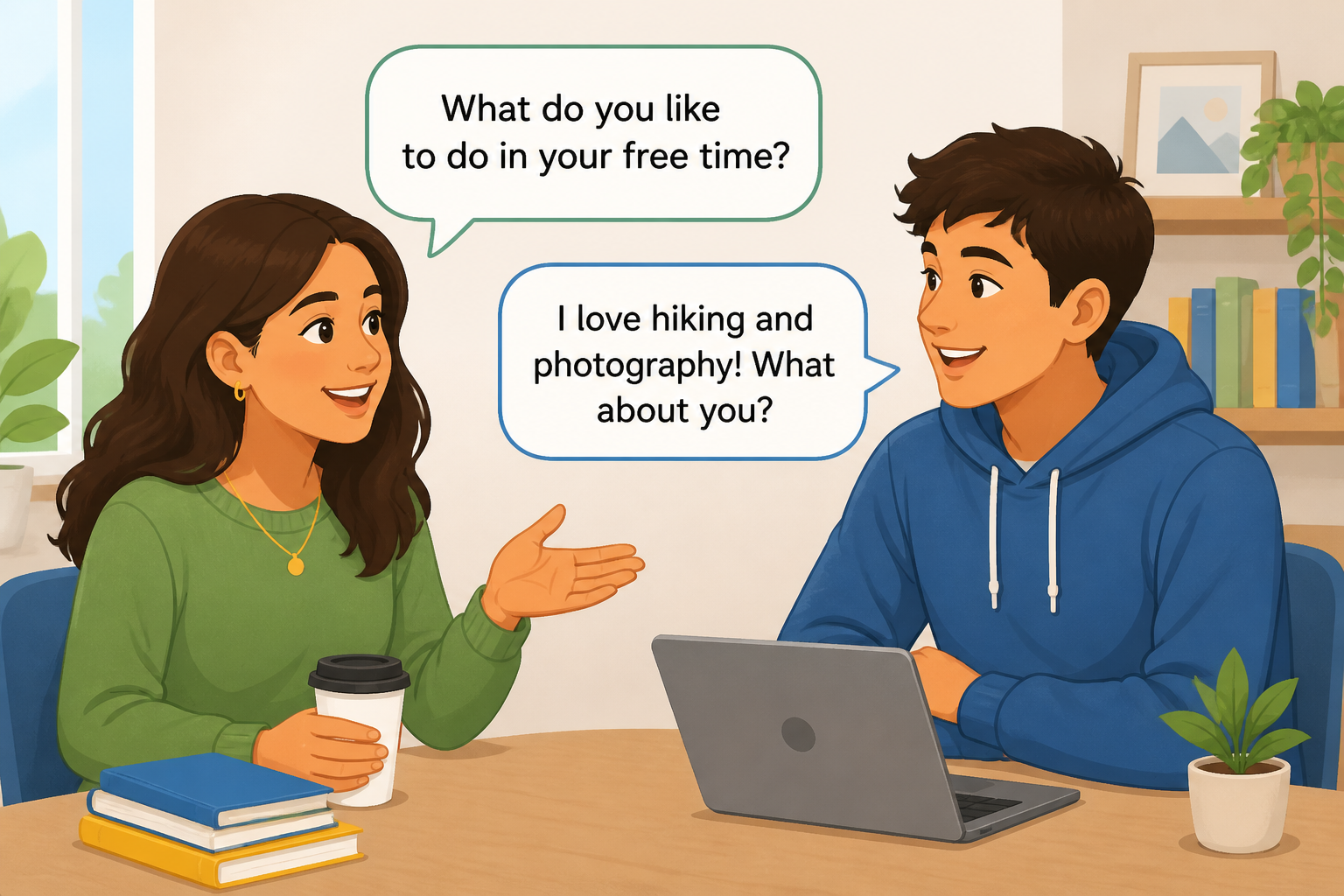
एक basic conversation अक्सर greeting से शुरू होती है, फिर introduction, फिर simple question, और अंत में polite close.

इन mistakes को जल्दी सुधारें
Beginners अक्सर meaning सही रखते हैं, लेकिन structure थोड़ा गलत कर देते हैं. Practice के साथ यह जल्दी सुधरता है.
- Wrong: I from Delhi.
Right: I am from Delhi. - Wrong: He are my friend.
Right: He is my friend. - Wrong: What your name?
Right: What is your name?
Choose the correct sentence.
अब अपनी 3-line introduction बनाइए
नीचे prompt पढ़िए और mentally या aloud बोलिए. लक्ष्य perfect होना नहीं, clear होना है.
Use this frame:
My name is ___.
I am from ___.
I am a ___.
Example
My name is Aarav. I am from Lucknow. I am a student.
Tip: धीरे बोलिए, words clearly बोलिए, and pause after each sentence.
Ready for assessment?
You have now practiced the main speaking blocks: greeting, introduction, question, and polite expression.
Final Check
अब 5 questions होंगे. हर question में 4 options हैं. Next button assessment pages पर answer select करने के बाद ही unlock होगा. Final score अंत में दिखेगा.
Key Takeaways
- Review the core ideas.
- Connect concepts to practice.
- Prepare for assessment.
Loading...
Loading...
Loading...
Loading...
Loading...
Your assessment score
Complete all assessment questions to view your score.
Reference sources
- Cambridge Dictionary — everyday greetings, introductions, and polite expressions.
- British Council LearnEnglish — beginner speaking patterns and introductions.
- BBC Learning English — simple spoken English phrases and question forms.
- Oxford Learner’s Dictionaries — common spoken forms and usage examples.